In this article
- 01Why Spring and Autumn Are Useful Inspection Points
- 02When Should a Commercial Roof Be Checked More Often?
- 03What Should a Commercial Roof Inspection Cover?
- 04Can Maintenance Teams Carry Out Checks Between Visits?
- 05How Should Schools and Occupied Buildings Plan Inspections?
- 06Keep a Record That Leads to Action
- 07Start With the Roof You Have, Not a Generic Calendar
- 08Commercial Roof Inspection FAQs
- 09Commercial Roof Inspections in Harlow, Sawbridgeworth and Essex
For many commercial roofs, particularly flat roofs, inspections in spring and autumn are a sensible starting point. Additional checks may be needed after severe weather, rooftop works or signs of damage. The right frequency should also reflect the roof manufacturer’s guidance, warranty conditions, insurance terms and the building’s specific risks.
If you manage a school, office, warehouse or tenanted property, waiting for a leak is not a maintenance plan. Equally, booking the same inspection cycle for every building may overlook important differences in age, drainage, roof access and the consequences of water entering the building.
This guide explains how facilities managers, landlords and maintenance teams in Harlow, Sawbridgeworth and the wider Essex area can plan a practical commercial roof inspection schedule.
1Why Spring and Autumn Are Useful Inspection Points
Spring offers an opportunity to assess the roof after winter weather. An inspection can identify damage to coverings, roof edges, flashings and drainage before problems are left to develop.
An autumn inspection focuses attention on drainage, fallen leaves and visible defects ahead of wetter, colder conditions. Where trees overhang or surround a building, one autumn visit may not be enough to keep gutters and outlets clear throughout leaf fall.
These seasonal checks are a planning baseline, not a universal rule or a substitute for the roof system’s maintenance instructions. Manufacturer guidance for flat roofs commonly includes spring and autumn inspections, with extra attention where site conditions create greater risks.
2When Should a Commercial Roof Be Checked More Often?
A closer inspection or maintenance schedule may be appropriate where there is:
- A history of leaks, recurring repairs or drainage blockages.
- An older roof or uncertainty about its condition and maintenance history.
- Nearby trees, heavy debris accumulation or exposed conditions.
- Roof-mounted equipment, solar panels or frequent maintenance access.
- Sensitive spaces below, such as classrooms, occupied offices, stock storage or electrical equipment.
Recent rooftop work is another reason to review condition. New equipment, servicing visits and building works can disturb details or introduce accidental damage. Arrange an appropriate check after relevant works rather than assuming everything remains unchanged.
After severe weather, assess reported concerns promptly and arrange inspection when conditions allow safe access. If you notice an active leak or loose material, do not wait for the next scheduled visit.
3What Should a Commercial Roof Inspection Cover?
Agree the scope before appointing a contractor. Depending on the roof type and safe access available, a useful inspection may consider:
- Roof coverings: visible splits, punctures, open seams or displaced materials.
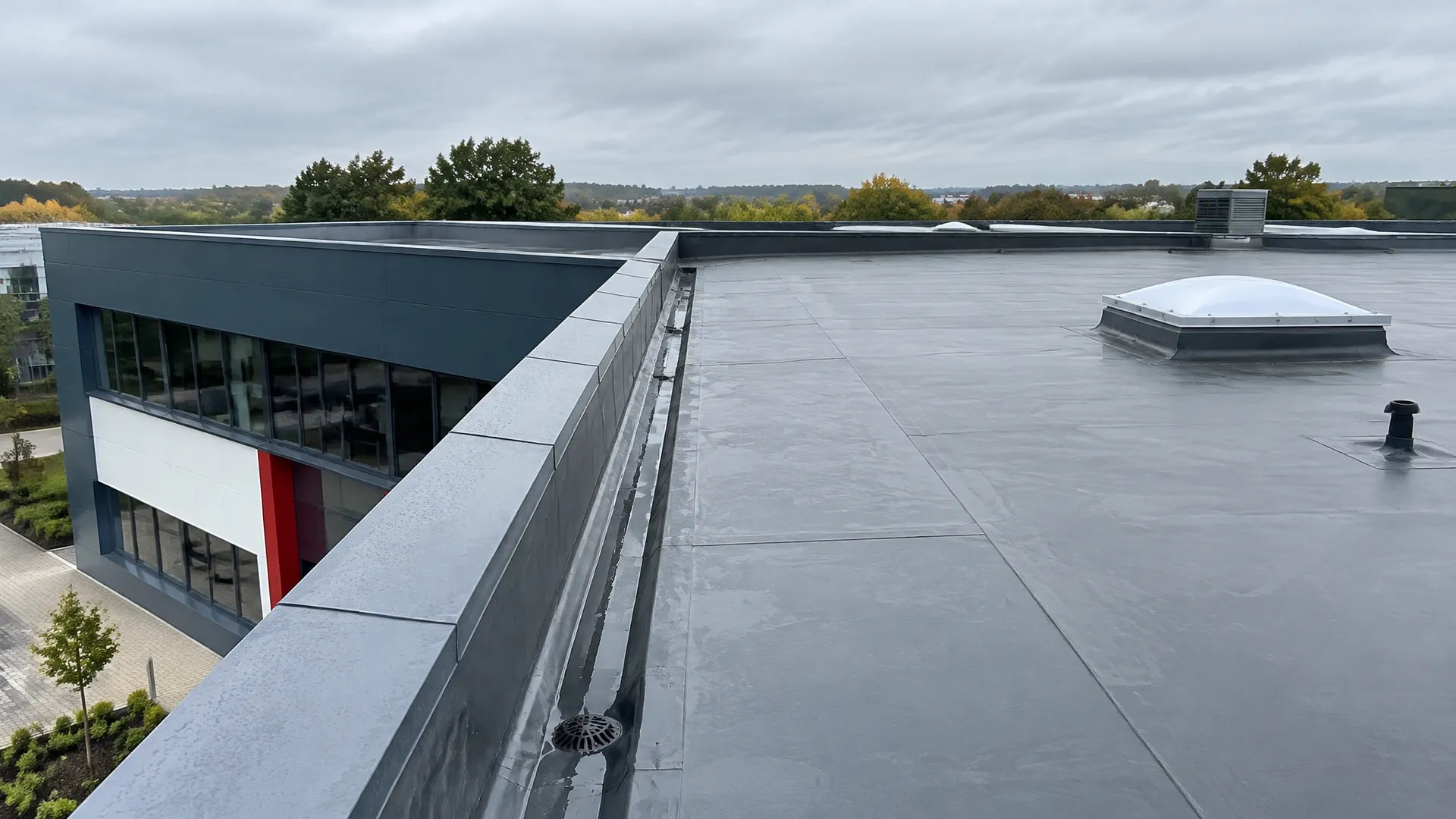
- Drainage: gutters, outlets, downpipes and evidence of recurring standing water.
- Junctions and edges: flashings, parapets, upstands and perimeter details.
- Rooflights and penetrations: visible condition around vents, pipes and roof-mounted equipment.
- Internal symptoms: staining, damp patches and the location and timing of reported leaks.
A visual inspection cannot reveal every concealed defect. Wet insulation, hidden construction or structural concerns may require further investigation by an appropriate specialist. Ask what was inspected, what could not be accessed and whether any additional assessment is recommended.
4Can Maintenance Teams Carry Out Checks Between Visits?
Building staff can help by recording visible concerns from ground level or other existing safe viewing positions. Overflowing gutters, displaced materials and new ceiling stains are useful observations to pass to a contractor.
These checks do not replace a suitable professional assessment. Do not send staff onto a roof simply because a hatch or ladder is available. Roof access requires appropriate planning, competence and precautions, including consideration of fragile surfaces and rooflights.
If water is entering near electrical equipment, or materials appear unstable, keep people away from the affected area and follow your site’s emergency procedures. Arrange appropriate specialist assistance rather than attempting an improvised repair.
5How Should Schools and Occupied Buildings Plan Inspections?
For school business managers and estates teams, the inspection date is only part of the planning. Discuss access routes, safeguarding arrangements, contractor arrival times and how any areas below the work will be managed.
Some checks may be possible while the building is occupied; others may need a quieter period. Agree this with the contractor rather than assuming every visit must wait until the holidays—or that every inspection can proceed during normal operations.
If the inspection identifies work, separate urgent concerns from repairs that can be planned around the building’s calendar. This helps maintenance teams brief colleagues, tenants or budget holders without treating every defect as an emergency.
6Keep a Record That Leads to Action
An inspection is most useful when its findings feed into the maintenance plan. Keep the inspection date, roof area, photographs, observed defects, access limitations and recommended next steps together.
Record who is responsible for each action and when it should be reviewed or completed. Keep evidence of repairs and subsequent checks so that recurring concerns can be tracked over time.
For landlords and managing agents, establish who holds responsibility under the relevant lease or management arrangements. Also check the actual warranty and insurance documents: inspection and record-keeping requirements vary. A general twice-yearly recommendation does not confirm compliance with a particular policy or guarantee.
7Start With the Roof You Have, Not a Generic Calendar
If the inspection history is unclear, arrange a baseline assessment and gather available drawings, previous reports, repair records and roof-system information. Use those findings to agree an inspection and maintenance schedule appropriate to the building.
For a property portfolio, maintain a separate record for each roof or roof section. Different ages, systems and drainage arrangements may call for different attention, even within the same site.
Regular inspections cannot guarantee that a leak will never occur. They can, however, help identify visible deterioration, support repair planning and reduce reliance on emergency decisions.
Commercial Roof Inspection FAQs
Is once a year enough for a commercial roof inspection?
It may not be. Spring and autumn checks are a useful starting point for many commercial roofs, particularly flat roofs, but the schedule should follow the system’s maintenance guidance and reflect site risks. Ask a suitable roofing professional to advise on your building.
Should a new commercial roof still be inspected?
Yes. A new roof still needs appropriate inspection and maintenance, including drainage checks. Follow the installer’s handover information and manufacturer’s maintenance requirements rather than assuming a new installation needs no attention.
Does a roof need checking if it is not leaking?
Yes. Visible wear, blocked drainage and damaged details can develop before water appears indoors. A lack of reported leaks does not establish that the roof is in good condition.
Are an inspection and a roof repair the same service?
No. An inspection assesses condition within an agreed scope. Cleaning, repairs, testing and intrusive investigations may be separate activities. Confirm what is included before booking.
Commercial Roof Inspections in Harlow, Sawbridgeworth and Essex
Ascend Roofing Ltd provides commercial roof inspections, leak detection, repairs and maintenance. If you are responsible for a commercial property or school and are unsure when the roof was last checked, contact Tommy and the team to discuss the building and the appropriate next step.
Explore our commercial roofing services or call 01279 295932. You can also email office@ascendroofingltd.com.
Written by
Ascend Roofing Ltd
A fully insured local roofing team serving Harlow, Essex and Hertfordshire. Call 01279 295932 or email office@ascendroofingltd.com.